
“That’s My Cue!”
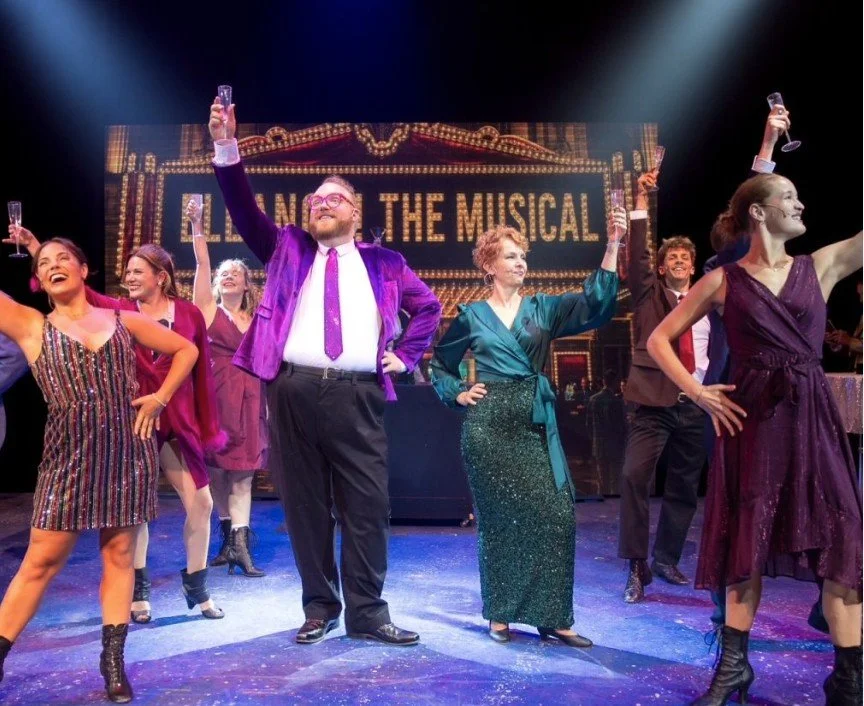
“The Prom” onstage. Actors.
What is a cue?
You know how actors know when to enter a scene or say their line based on hearing another actor’s line or seeing an action performed by another actor on stage? That’s called a cue. It’s the thing that tells someone it’s time for them to do something.
A command of the language…
When we’re talking about dogs, you’re probably familiar with saying the word “sit.” That word is the cue (not that cringy word, “command”…) for your dog to perform the act of putting their butt on the floor. You might have also taught your dog (either intentionally or not) that lowering your hand is also a cue to “sit.”
Communication is key
Dogs obviously don’t communicate with us (or each other) with words. They use visual language (e.g., a look, the raising or lowering of a tail, tilting of the head, etc.). These are cues that let other dogs know they want to play, that they are not friendly, etc.
Word up!
I want to challenge you to expand your thinking about cues to include all sorts of stimuli, thereby expanding your ability to communicate your desires and expectations with your dog without having to use verbal cues OR body language! Sound like magic? Well, it kind of is…
Cue me
Let’s start with an example using those stage actors from before. Let’s say when the other actor in the scene picks up a book from the shelf, that’s your cue to walk over to the refrigerator and open it. No words. No hand signals. You know exactly what to do just by the other actor picking up the book. Picking up the book IS THE CUE. With me so far?
Paint with all the colors of the wind
Now, let’s say that your opening the front door could become a cue for your dog to turn and look back at you (instead of running out the door ahead of you 😊). What about on a walk, your stopping becomes a cue for your dog to stop too? The list goes on and on.
How to
You and your dog have already learned some cues with no formal training. For instance, your dog knows when they hear your key in the door, the next thing that will happen is the door will open and you will walk in. They know when they hear that certain cabinet, box, bag, etc. open, it means treats are coming. You didn’t intentionally teach them any of those things! Now, let’s use those powers for good (for my “Wicked” fans...).
As in the examples above, you can see that something becomes a cue by following it with something else. The door opens, and then you walk in. As you’ll learn in our lessons, we’re going to create a “behavior chain” in which we open the door, then (at first) cue the dog to look back at us, then mark and reinforce that behavior. Soon, the opening of the door BECOMES THE CUE (without needing to cue the look back). The possibilities are endless.
That’s my cue…
Well, I think that’s my cue to end this blog. Now go make a dog smile today! See you in the next one.